Hebrews 6:19-20 (NKJV)
This hope we have as an anchor of the soul, both sure and steadfast, and which enters the Presence behind the veil, where the forerunner has entered for us, even Jesus, having become High Priest forever according to the order of Melchizedek.
What hope is the author of Hebrews referring to in this passage? The previous verse introduces the topic of hope. The author says that since it is impossible for God to lie, “we might have strong consolation, who have fled for refuge to lay hold of the hope set before us.” I love the phrase “fled for refuge”. It reminds me of Psalm 91. What a beautiful picture–we are fleeing for the refuge of God and grasping the Living Hope, Jesus Christ. The anchor of our hope is sure and secure, and instead of being planted in shifting sands, it is rooted firmly on the Rock of Christ.
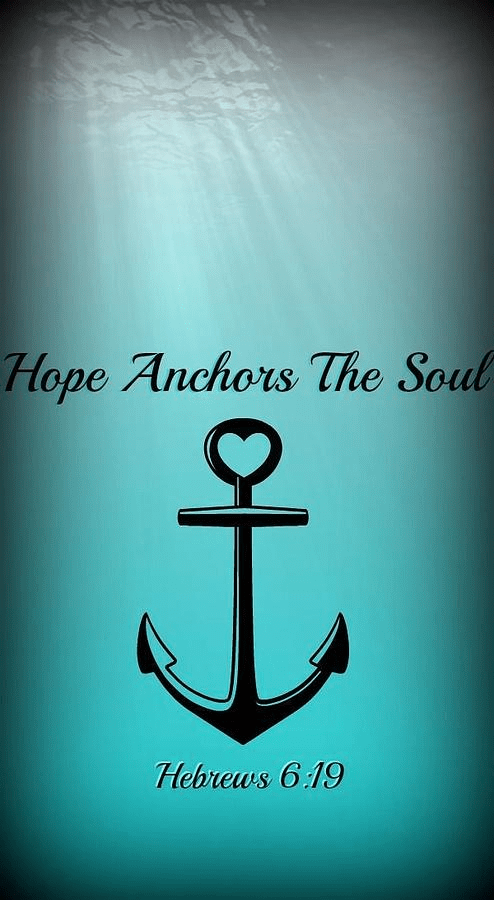
Verse 20 speaks of Jesus as a forerunner. Looking at this word in the original Greek reveals its deeper meaning. This word was used in the 2nd century AD to describe smaller boats sent into the harbor by larger ships which were unable to get there themselves due to stormy weather. The smaller boats carried the ship’s anchor through the large waves, paving the way and securing it for the ship.
This is what Jesus Christ did for us! Not only is He our anchor, but He also took our anchor and secured it at port. Therefore, there is no question as to where we will eventually land.
I wrote this poem about our hope in Christ.
Hope
The waves toss and turn, full of fright.
The storm rages in my deepest night.
And yet, my anchor stands firmly in port–
My anchor is rooted on Heaven’s shore.
Without hope, we couldn’t live, so
My hope is in Christ, this I know:
He’ll never fail me, He’ll always stay true.
He is a refuge for me and for you.
To place hope in earthly things is vain–
They are passing away and futile the same.
But Christ is eternal, immutable, tender with His sheep;
He is always the same; His promises He’ll keep.
He took my anchor, that anchor of hope,
And He paved my way, securing my rope.
He dropped my anchor firmly in placid waters,
And blazed the trail for me to follow.
So though the storms are tempestuous, and the waters roar,
My hope, my confidence is steady as I make my way to heaven’s shore.